BOAT & OVERSIZE TRANSPORT ·
Can You Ship a Lifted Truck or Oversized SUV? Measure Before You Book
By Genius Auto Trans · 10 minute read
The short answer: A lifted truck or oversized SUV can often be transported, but it should not be booked from the factory model name alone. The useful quote starts with the vehicle's current overall height, width, length, weight, running condition, ground clearance and modifications. Those facts help determine whether suitable standard equipment works or a different trailer, loading angle or permitted route must be planned.
A six-inch lift does not tell the whole story. Larger tires, aftermarket bumpers, a roof rack, bed cap, spare carrier or suspension changes can alter several dimensions at once. An accurate description before dispatch is far more useful than discovering at pickup that the vehicle will not clear a deck, rail, ramp or enclosed-trailer opening.
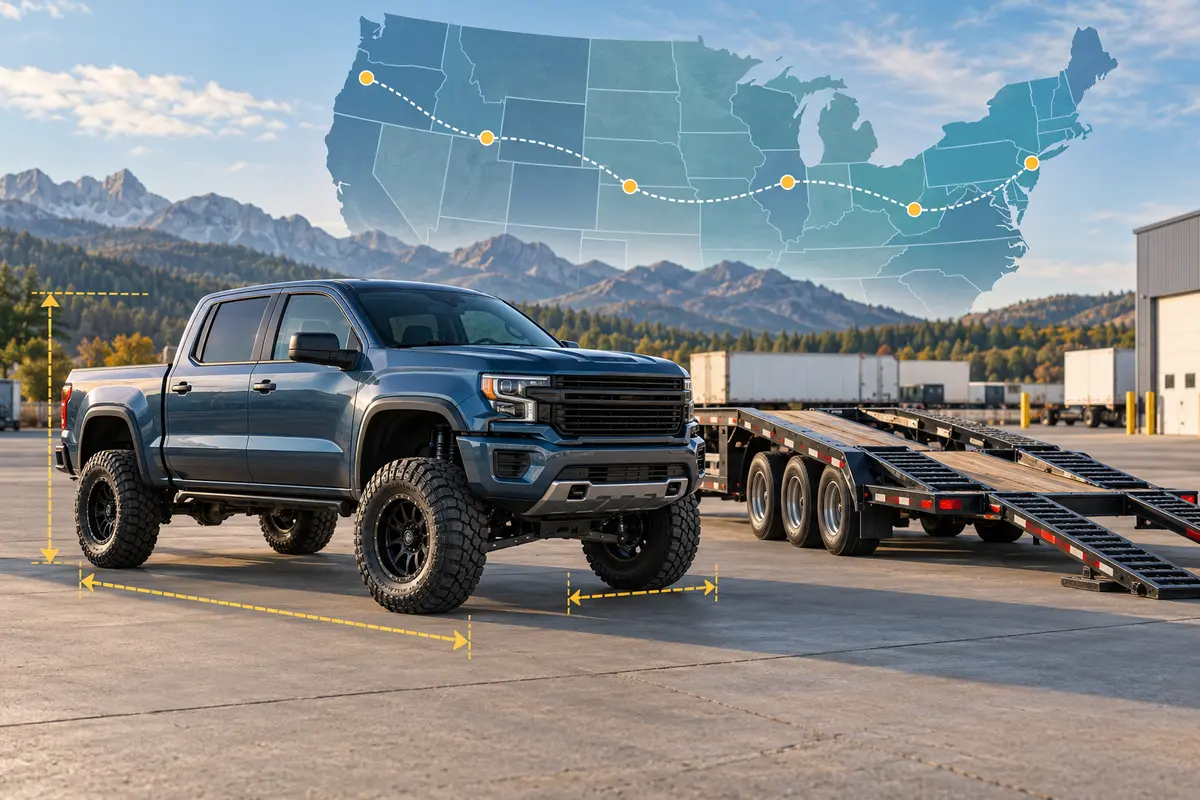
Measure the vehicle as it will actually travel
Start on level ground and record the current configuration. Do not rely on a dealer brochure or an online specification for the stock model. If the vehicle has been modified since purchase, the transporter needs the result of those changes, not the original number.
- Overall height: measure from the ground to the highest fixed point, including a roof rack, light bar, antenna base or cargo box that will remain installed.
- Overall width: identify the widest point in the transport configuration. Note extended fender flares, wide tires and whether mirrors fold.
- Overall length: include aftermarket bumpers, brush guards, winches, steps and rear-mounted spare or hitch accessories that stay attached.
- Current weight: provide the best reliable figure available and disclose heavy additions such as armor, winches, auxiliary tanks or a bed camper. If the weight is uncertain, say so rather than guessing.
- Ground clearance and loading profile: record the lowest point and mention long overhangs, side steps or components that could contact a ramp as the vehicle changes angle.
- Operating condition: state whether it starts, steers, rolls and brakes, whether the parking brake works, and whether the keys are present.
Add clear photos from the front, rear, both sides and three-quarter angles. Include close-ups of low components and permanent modifications. A short list naming the lift kit, wheel and tire size, bumper changes and roof equipment helps the carrier compare the vehicle with the actual trailer rather than infer from photos alone.
Dimensions affect more than trailer capacity
Vehicle size influences deck space, ramp angle, tire-track fit, securement access and the combined loaded profile. A truck may be within a carrier's weight limit but still be too tall for one deck position or too wide for a particular rail and track arrangement. Conversely, a vehicle described as lifted may fit appropriate conventional equipment once the real numbers are checked.
| Vehicle detail | Why it matters | What to send |
|---|---|---|
| Lift and overall height | Deck spacing, overhead clearance and loaded route profile | Ground-to-highest-point measurement and a side photo |
| Wide tires or fender flares | Track width, rail clearance and securement access | Overall width, tire size and front/rear photos |
| Low steps or long overhangs | Ramp breakover, approach and departure angles | Lowest clearance, wheelbase and low-component photos |
| Added accessories | Length, height, loose-item risk and tie-down access | List what stays installed and what can be removed |
| Actual weight | Trailer capacity, load planning and securement category | Reliable weight record plus heavy modifications |
Enclosed transport is not automatically the answer for a tall modified vehicle. It adds weather and road-debris protection, but each enclosed trailer has its own door opening, interior height and loading geometry. If protection is important, request it and supply the same measurements so a compatible trailer can be checked. Compare the tradeoffs in the open versus enclosed transport guide.
Genius Auto Trans lists lifted trucks and oversized vans within its boat and oversize transport service. Equipment is matched to the shipment-specific dimensions, weight and route; there is no honest one-trailer answer for every modified truck or SUV.
The loaded combination—not just the SUV—drives route review
An owner does not decide whether a commercial transport combination needs an oversize or overweight permit. The responsible carrier evaluates the vehicle, trailer and route together under the rules that apply in every state crossed. Accurate measurements let that review happen before pickup.
The Federal Highway Administration's oversize and overweight permit guidance explains that the federal government does not issue these permits; permitting is a state function. FHWA also notes that states may grant special-use permits for vehicles exceeding the federal 102-inch width limitation. Because the route may cross several jurisdictions, a threshold or assumption from one state is not a nationwide answer.
Securement also depends on the vehicle's weight and category. FMCSA's cargo securement overview distinguishes automobiles, light trucks and vans at 10,000 pounds or less from heavier vehicles and equipment. The current eCFR section 393.130 sets additional requirements for heavy vehicles at 10,000 pounds or more. The practical customer takeaway is simple: report the weight and modifications; do not ask a carrier to plan securement from appearance alone.
Prepare the truck and the handoff—not just the quote
- Remove loose exterior and interior items that are not part of the vehicle.
- Secure or remove accessories only as agreed, then photograph the final setup.
- Check for leaks, weak batteries, tire problems and steering or brake issues.
- Leave the keys and any alarm, immobilizer or air-suspension instructions.
- Document condition in clear daylight before the pickup inspection.
- Keep a responsible adult available to review and sign the Bill of Lading.
The pickup area should have enough room for the assigned truck and trailer to enter, align, load and leave safely. Tell the transport team about a gravel slope, soft ground, low branches, gate, steep driveway, parking restriction or narrow turn before the driver arrives. A nearby paved commercial lot or wide road may be the safer handoff point. The door-to-door pickup guide explains how to agree on an alternative meeting place.
At delivery, compare the vehicle with the pickup condition record before signing. Note any new issue on the Bill of Lading at the time of inspection. Our vehicle preparation checklist covers the complete before-and-after handoff.
Three measurement-first planning examples
These are planning scenarios—not customer stories, prices, transit estimates or guarantees.
California to Texas: a lifted crew-cab pickup
A truck on the California-to-Texas route has a suspension lift, 37-inch tires, steel bumpers and a winch. The owner sends current height, width, length and weight plus photos of the tires, bumper and lowest suspension points. The quote is evaluated against compatible equipment; the stock-model dimensions are kept only as a reference.
Illinois to Arizona: an SUV with a roof system
An SUV following the Illinois-to-Arizona route has modest suspension changes but a tall fixed roof rack and side awning. The highest point—not the lift-kit label—controls the reported height. The owner identifies which accessories remain attached and provides the post-preparation measurement so enclosed and open options can be checked honestly.
North Carolina to Colorado: a wide off-road build
A modified vehicle on the North-Carolina-to-Colorado route has wide tires and extended fender flares. Overall width, tire size and securement access matter more than the factory body width. The owner also flags a steep rural driveway, allowing a level paved meeting point to be chosen before dispatch.
Lifted truck and oversized SUV: FAQs
Can Genius Auto Trans ship a lifted pickup truck?
Yes, subject to the truck's actual dimensions, weight, condition, route and suitable equipment availability. Share the lift height, tire size, overall measurements, ground clearance and clear photos before equipment is assigned.
Are factory specifications enough for a modified vehicle?
No. Factory specifications describe the original configuration. A lift kit, larger tires, roof rack, bumper, winch, bed cap or spare-tire carrier can change the loaded dimensions and clearance that matter to the transporter.
Does a lifted truck always need a special trailer?
Not always. Some modified trucks fit suitable conventional equipment; others need a different deck height, loading angle or trailer type. The correct answer comes from the vehicle's real measurements and the carrier's equipment limits, not from the word lifted alone.
Should accessories be removed before transport?
Remove loose items. For bolted or fixed accessories, ask before changing anything. A removable roof basket, antenna, light bar or hitch attachment may affect height or length, but removal and reinstallation should be agreed in advance and completed safely by the owner or a qualified shop.
Where is oversize vehicle transport available?
Genius Auto Trans coordinates road transport across the 48 contiguous states and Washington, DC, subject to route, permit and equipment availability. Alaska, Hawaii and international transport are not offered.
Bring the measurements to your quote
Share the route, year, make and model, current height, width, length, weight, ground clearance, running condition, modification list and clear photos. Genius Auto Trans can use those details to assess suitable equipment and route needs across the 48 contiguous states and Washington, DC. Alaska, Hawaii and international transport are not offered.
Request my oversize vehicle transport quote →