
SPECIALTY VEHICLES ·
RV Transport: How Do Motorhomes and Travel Trailers Move by Road?
By Genius Auto Trans · 7 minute read
The short answer: RV transport moves a motorhome, travel trailer or fifth wheel in one of two ways: a contracted driver drives or tows it on its own wheels, or a carrier hauls it on a flatbed, step-deck or lowboy trailer. Height, width, weight and whether it runs decide the method and any permits.
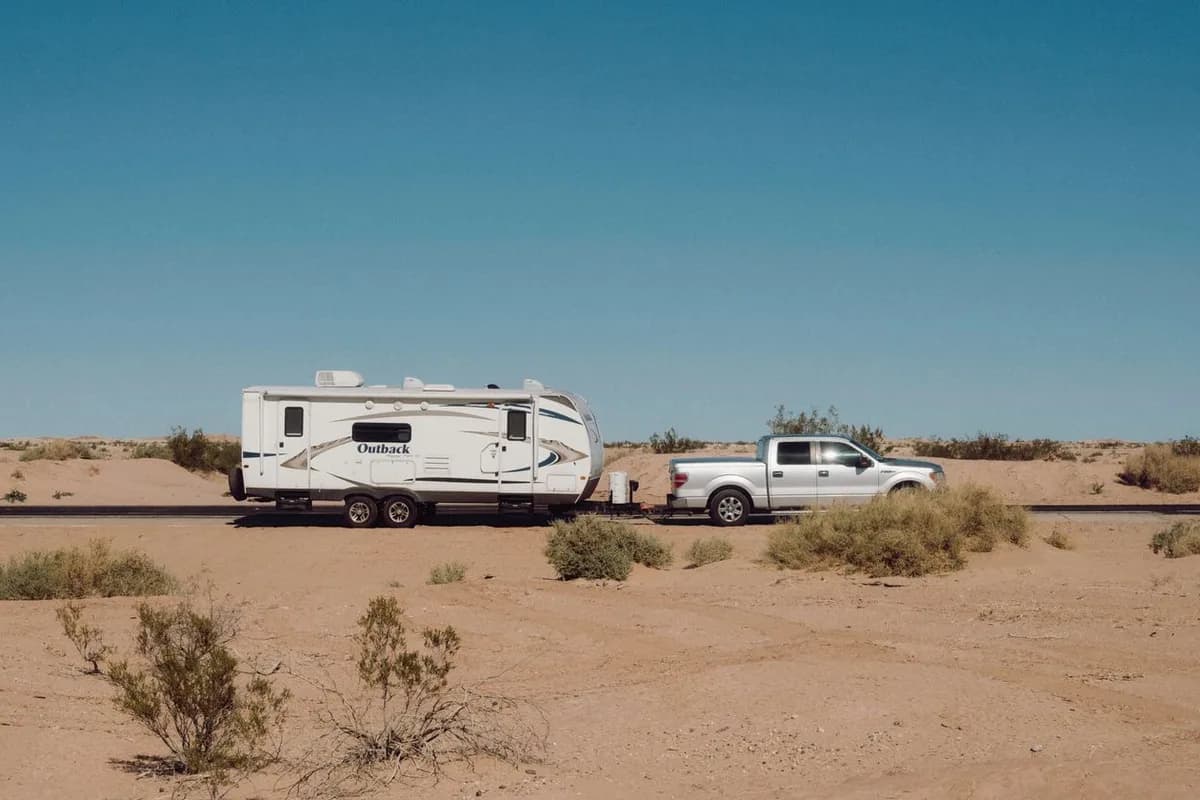
An RV is not a car on a bigger trailer. Most are too tall or long for the multi-car carriers that move sedans, so RV transport is planned around measurements first. We arrange it through the same desk that handles our boat and oversize transport, and this guide shows what decides the method before you ask for a quote.
How does RV transport work?
Every RV transport works one of two ways: the RV travels on its own wheels, or it rides on a trailer deck. Federal rules define a driveaway-towaway operation as moving an empty, unladen vehicle with one or more sets of wheels on the road, for example from a dealer to a purchaser, or by saddle-mount or tow-bar, in 49 CFR 390.5.
- Driven (drive-away). A transport driver drives your motorhome. It adds miles and engine hours, and the unit must run.
- Towed (towaway). A carrier's truck tows your travel trailer or fifth wheel on its own wheels, so tires, brakes and lights must be road-ready.
- Hauled on a deck. The RV rides on a flatbed, step-deck or lowboy. No miles are added and a non-running unit can move, but loaded height becomes the limit.
A broker is a company that arranges transport with an authorized motor carrier; a carrier is the company whose truck and driver actually move the RV. Genius Auto Trans, a licensed auto transport broker, USDOT 3674601 / MC 1274912, Manassas, Virginia, arranges RV transport with independent carriers. We own no trucks; the carrier's name is on your paperwork.
Which RV transport method fits your motorhome or trailer?
| RV type | Usual road options | What usually decides it | Measure and tell us |
|---|---|---|---|
| Class A motorhome (bus-style, heavy chassis) | Driven; hauled on a deck only when the loaded height allows | Running condition and loaded height | Height to the roof AC top, length, weight |
| Class C motorhome (cab-over, truck or van chassis) | Driven, or hauled on a step-deck or lowboy | Whether it runs and whether you want zero added miles | Height with cab-over and roof gear, weight |
| Class B camper van | Driven, or hauled on a flatbed or lowboy | Roof height with fans, racks and solar panels | Height, length, roof add-ons |
| Travel trailer | Towed on its own wheels, or hauled on a flatbed | Condition of tires, brakes and lights | Length hitch to bumper, height, axle count, GVWR |
| Fifth-wheel trailer | Towed by a truck with a fifth-wheel hitch, or hauled | Hitch setup and overall height | Height, length, pin weight if known |
These are usual options, not fixed rules; measured size, running condition and the states on the route decide. Ask for the method in writing: a quote that does not say driven, towed or hauled cannot be compared with one that does.
Why do measurements decide RV transport?
There is no single federal height limit. The FHWA's federal size regulations summary notes that states set height limits, most from 13 feet 6 inches to 14 feet, while the federal width standard on the National Network is 102 inches.
An oversize load is a vehicle or load that exceeds a state's legal width, height, length or weight limit and may travel only under that state's permit. The FHWA states that the federal government does not issue oversize or overweight permits; each state does. Permits add lead time and can restrict routes and travel hours.
The constraint most owners miss: a deck adds its own height. A tall motorhome that is legal on its own wheels can become an oversize load once it sits on a trailer, which is why tall Class A coaches are usually driven. Our post on measuring a lifted truck before you book uses the same logic.
How do you prepare an RV for transport?
- Retract and lock slide-outs, awnings, steps, jacks and antennas; latch vents, windows and cabinets.
- Turn off propane at the tank and switch off appliances; ask how the carrier wants cylinders handled.
- Drain the fresh, gray and black tanks; water weight can change the equipment needed.
- Remove or secure loose items. The carrier's cargo insurance does not cover personal belongings.
- For a towed unit, check tire age and pressure, bearings, brakes, lights, chains and the breakaway switch.
- Photograph every side and the roof; record odometer and generator hours.
A bill of lading is the document the driver completes at pickup and delivery that records the RV's condition and names the carrier. Check it against your photos. Our six-step shipping process shows where each inspection happens.
Who insures an RV during transport?
The assigned carrier's cargo insurance is primary. Genius Auto Trans does not insure vehicles; we provide the carrier's certificate on request. Read it against your RV's value, because a cargo limit often applies to the whole load.
For a driven or towed RV, ask in writing which policy covers it on its own wheels. Cargo policies generally exclude personal items and pre-existing damage. If you find new damage, note it on the bill of lading, notify us by phone within 48 hours and submit within 10 days with photos and two repair estimates. How we vet carriers explains the authority, insurance and equipment checks we run before assignment.
When should you book RV transport?
Earlier than for a car: fewer carriers run RV-capable equipment, and permits add lead time. Pickup comes as a window, not a date, and we do not guarantee pickup or delivery days. Southbound snowbird demand peaks in October and November, northbound in spring. We arrange RV transport across the 48 contiguous states and Washington, DC; we do not ship to Alaska, Hawaii or internationally.
Three RV transport planning examples
These are planning scenarios, not customer stories, prices, transit estimates or guarantees.
Michigan to Florida, fifth wheel in late October
The owners fly south. On the Michigan to Florida route in snowbird season, they send height, length and pin weight, have tires and brakes checked for a towaway move, and accept a wider pickup window.
Indiana to Texas, new travel trailer from a dealer
A buyer ships a trailer from an Indiana dealer on the Indiana to Texas route and confirms the dealer's release paperwork, pickup hours and who signs the bill of lading.
Colorado to Arizona, Class C that will not start
It cannot be driven, so it must be hauled. The owner measures height including the cab-over and roof AC so the carrier can check whether a lowboy keeps it under route height limits.
Frequently asked questions
How is an RV transported?
In one of three ways: a transport driver drives the motorhome, a carrier tows a travel trailer or fifth wheel on its own wheels, or the RV is hauled on a flatbed, step-deck or lowboy trailer. Height, weight, running condition and the route decide which fits.
Does RV transport put miles on my motorhome?
It depends on the method. A driven motorhome adds every mile of the trip to the odometer and engine hours, plus normal wear. A motorhome hauled on a trailer deck adds no miles, but its loaded height may require an oversize permit. Ask which method your quote assumes.
Can you ship a travel trailer if I don't have a truck?
Yes. A carrier's truck can tow the travel trailer on its own wheels, or the trailer can ride on a flatbed. For towing, the trailer's tires, brakes, lights, safety chains and breakaway switch must be roadworthy. Send its length, height, axle count and GVWR with your quote request.
Do I need a permit to ship an RV?
Only if the RV, or the RV plus the trailer it rides on, exceeds a state's legal height, width, length or weight limit. States issue those permits, not the federal government, and each state on the route may need one. The carrier normally obtains them, and they add lead time.
Can I leave belongings inside my RV during transport?
Leave as little as possible. The carrier's cargo insurance does not cover personal belongings, extra weight can change the equipment needed, and loose items can damage the interior. Remove valuables, latch cabinets and tell your coordinator about anything left aboard.
Request my RV transport quote
Send the RV type, year, make, model, measured height, length, width and weight, whether it runs, and both ZIP codes. We quote your shipment, not a rate card, and the price you agree at booking is the price you pay. We serve the 48 contiguous states and Washington, DC.
Request my RV transport quote →