
On this page
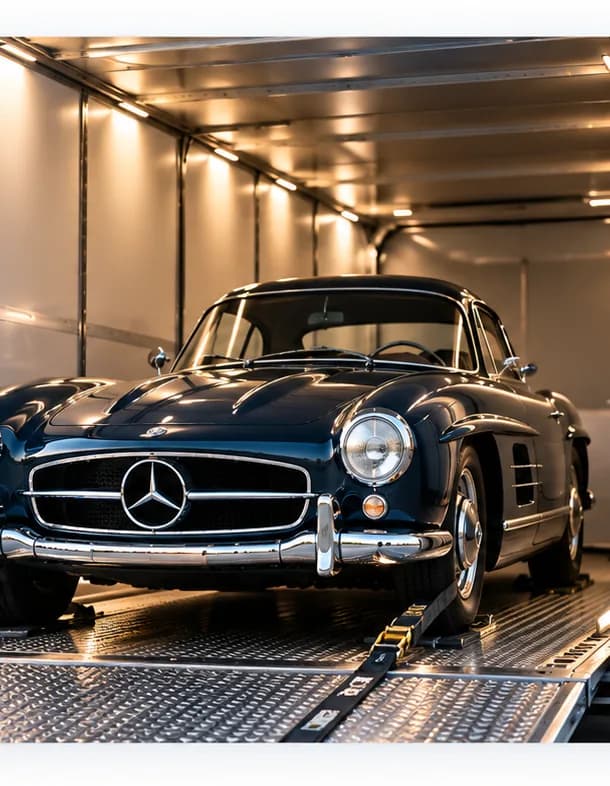
Exotics, classics, collector cars, concours vehicles, high-end modern performance cars and anything with paint that cannot simply be redone.
The practical difference is not attentiveness — every carrier will tell you they are careful. It is equipment and matching: an enclosed trailer with a hydraulic liftgate and a driver who has loaded low cars before, versus a ramp and someone who has not.
Genius Auto Trans is a licensed auto transport company — USDOT 3674601, MC 1274912, ACTIVE with the FMCSA. We arrange luxury transport through a vetted network of more than 10,000 carriers.
The right transport for your vehicle
High-value vehicles deserve careful planning. We review your vehicle’s dimensions, ground clearance and protection needs before recommending equipment.
A carrier owns trucks. It can offer you its own equipment on its own schedule, and if your car matches its trailers and your dates match its routing, that works well.
We source enclosed transport with the loading equipment your vehicle requires, including liftgates or low-angle ramps when needed. Carrier selection is based on your vehicle, route and pickup window.
You have a named point of contact for your shipment and public registration details you can verify: USDOT 3674601, MC 1274912. We check the assigned carrier’s operating authority and cargo insurance before your vehicle is handed over.
Equipment, and how we match it to your car
- Hard-side enclosed — rigid walls, maximum protection and discretion. The default for exotics, concours vehicles and anything irreplaceable.
- Soft-side enclosed — rigid frame, heavy fabric sides. Full weather and debris protection, wider availability, lower cost. Right for high-value cars that are driven rather than displayed.
- Hydraulic liftgate — raises the vehicle horizontally onto the deck. Required for low ground clearance, front splitters, aggressive aero or lowered suspension. Ramp loading a low car is how front lips get destroyed, and it is entirely avoidable.
- Soft tie-downs — wheel and tyre straps rather than chains at suspension or chassis points. Standard practice on this equipment.
- Dedicated versus multi-car enclosed — a dedicated trailer carries your vehicle alone on your schedule. Multi-car enclosed carries two to seven in separate positions and is where most of the value sits.
What we need from you: ground clearance, overall dimensions, whether it runs and steers, battery condition, and any modification that changes how it loads. Give us those and the equipment question answers itself.
What luxury auto transport costs
No price table, no per-mile figure, no percentage premium. On this kind of vehicle a published number is close to meaningless — the trailer type, the loading equipment, the corridor and the availability that week all move it more than distance does.
Your quote is built from:
- Trailer specification — hard-side or soft-side, dedicated or shared
- Loading method — liftgate equipment is a narrower and more expensive pool than ramps
- Vehicle dimensions, weight and clearance — enclosed trailers have fixed internal limits
- Running and rolling condition — a non-running collector car needs winch capability inside an enclosed trailer
- Distance and corridor — specialist enclosed carriers run fewer lanes
- Timing — show and auction calendars tighten capacity hard on specific dates
- Access at both ends — private storage, restoration shops and auction sites vary a great deal
Cost detail across services: FAQ — Cost & Pricing.
What we move
- Exotics and hypercars — low clearance, aero, liftgate required
- Classic and vintage cars — often non-running, often irreplaceable, frequently needing winch and soft tie-downs
- Collector and concours vehicles moving to and from shows and judging
- High-end modern performance cars where correcting a stone chip properly costs four figures
- Restoration projects in and out of shops, running or not
- Auction purchases and consignments at the top of the market
- Luxury EVs — heavier than they look, with specific tie-down and state-of-charge considerations. Tell us the model.
Standard vehicles are better served by enclosed auto transport or open auto transport, and we will say so rather than sell you equipment you do not need.
Our process
- Consultation — vehicle specification, clearance, condition, both locations, timing constraints.
- Equipment specification — trailer type and loading method fixed before sourcing begins.
- Carrier sourcing and vetting — active operating authority and cargo coverage verified before your vehicle is assigned.
- Pickup and inspection — condition documented on the bill of lading with you present. On a vehicle of this value, take your own dated photographs as well; it is your record.
- Transit — a contact point throughout.
- Delivery and inspection — condition documented again before you sign.
Every carrier we assign is required to hold active cargo insurance, and we will provide that carrier's certificate on request. For a vehicle worth more than market rate we recommend either a special insurance rider or enclosed transport — that is our own published guidance in our Terms and Conditions.
Full sequence: How It Works. Payment terms: How to Pay.
Where we ship
Throughout the 48 contiguous states and Washington, DC. Alaska and Hawaii are not served.
Specialist enclosed capacity is unevenly distributed — it concentrates around collector markets, auction calendars and show circuits. We will tell you what lead time your corridor realistically needs rather than booking optimistically.
Locations Hub · Routes Hub · State-to-state car shipping · Services Hub
Frequently asked questions
What is luxury auto transport?
Vehicle shipping for cars whose value, rarity or condition requires specific equipment — normally an enclosed trailer, often with a hydraulic liftgate and soft tie-downs. It is defined by the equipment the car needs, not by a price bracket.
Should my exotic car ship enclosed?
In almost every case, yes. Enclosed protects against weather, road debris and visibility, and enclosed carriers are the ones equipped with liftgates and soft tie-downs. Open transport is not appropriate for low-clearance or irreplaceable vehicles.
Can you transport a classic car that does not run?
Yes. A non-running classic needs a winch-equipped enclosed carrier and careful loading. Tell us at quote stage whether it rolls, steers and brakes — those three answers determine the equipment.
How do you protect a car with low ground clearance?
With a hydraulic liftgate, which raises the vehicle horizontally onto the deck instead of driving it up an incline. Give us the clearance figure at quote stage and we source liftgate equipment from the start.
Is my vehicle covered during transport?
Every carrier we assign is required to hold active cargo insurance, and we will provide that carrier's certificate on request. For a vehicle worth more than market rate we recommend either a special insurance rider or enclosed transport — that is our own published guidance in our Terms and Conditions.
How far in advance should I book luxury auto transport?
Further than for standard transport. Specialist enclosed equipment is a smaller pool and show and auction calendars concentrate demand. If your date is fixed, book early and tell us it is fixed.
Who transports my vehicle?
We coordinate transport through a vetted network of more than 10,000 independent motor carriers. That lets us match your vehicle to suitable equipment and a carrier working your route. The assigned carrier performs pickup, transport and delivery.
More answers: Car Shipping FAQs.
Questions first? Call (800) 780-1113.