
VEHICLE TYPES ·
Sprinter Van Shipping: Will a High-Roof or Camper Van Fit on a Car Carrier?
By Genius Auto Trans · 7 minute read
The short answer: Sprinter van shipping usually works on an open car carrier, but roof height, length and built-out weight decide which deck position or trailer fits. A standard-roof cargo van often loads like a long pickup; high-roof, extended and camper-converted vans need measured height and weight first, and some move on a flatbed or single-vehicle trailer.
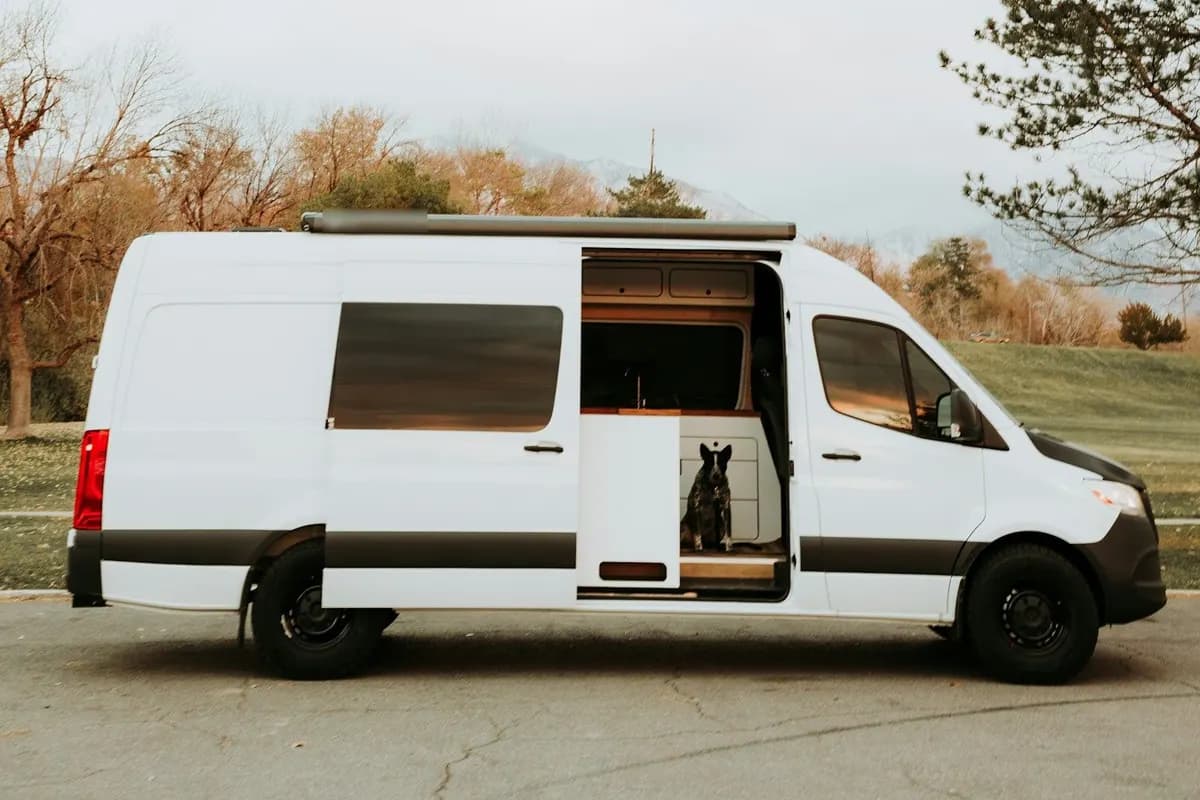
A Sprinter, Transit or ProMaster is built tall and long on purpose, and that is exactly what a car hauler has to plan around. Genius Auto Trans arranges Sprinter van shipping as part of its oversize and specialty vehicle transport, matching each van to a carrier whose deck clearance, length and weight capacity fit the van as it actually sits, not as the brochure lists it.
Can a Sprinter van ship on a regular car carrier?
Often, yes. Most open car carriers are two-level trailers, and clearance at each position depends on the deck, the rest of the load and the legal height of the whole rig. In Sprinter van shipping, the carrier decides placement after seeing your measurements.
- Standard-roof vans usually load like a long full-size pickup.
- High-roof vans need a position with extra clearance, and not every truck has one open.
- Raised-roof or heavily built conversions may go on a flatbed, step-deck or single-vehicle trailer instead.
Three terms recur. A broker arranges your shipment with an authorized motor carrier but does not haul it. A carrier is the licensed trucking company that hauls the van and whose cargo insurance covers it. The bill of lading is the receipt and condition report signed at pickup and delivery.
Which roof height and wheelbase does your van have?
Mercedes-Benz's 2026 Sprinter cargo van figures show how much one model name varies.
| Configuration | Overall length* | Overall height* | Usually ships on | Tell us at quote |
|---|---|---|---|---|
| 144-in wheelbase, standard roof | 234 in | 96–109 in, by model | Open carrier | Series, AWD |
| 144-in wheelbase, high roof | 234 in | 107–111 in | High-clearance open position or single-vehicle trailer | Height with roof gear |
| 170-in wheelbase, high roof | 274 in | 107–111 in | High-clearance open position or flatbed | Wheelbase, height |
| 170-in extended, high roof | 290 in | 107–108 in (listed models) | Deck length confirmed; sometimes a flatbed | “170 Extended”, length |
| Camper conversion or raised roof | Varies with build | Measure it | Flatbed or step-deck when tall | Solar, racks, fans, pop-top |
| Ford Transit or Ram ProMaster high roof | Manufacturer spec | Manufacturer spec | Same checks as a Sprinter | Roof option, wheelbase |
*2026 Sprinter cargo van figures published by Mercedes-Benz Vans; other years and builds differ.
The table is a guide, not a fit promise; carriers confirm fit against measured dimensions before dispatch. Measure height to the highest point (fan, solar, rack or antenna) and length bumper to bumper, including any ladder or hitch box.
How much does your van weigh after the build-out?
Weight is the second number in Sprinter van shipping, and builds add it fast: cabinets, water, batteries, shelving, roof gear. Two terms matter:
- Curb weight: what the van weighs empty, with standard equipment and fluids.
- Gross vehicle weight rating (GVWR): the most the manufacturer says the loaded van may weigh, printed on the door-jamb label described in our pickup truck and SUV shipping guide.
Mercedes-Benz lists maximum available GVWRs of 9,050 lb for the 2026 Sprinter 2500, 9,990 lb for the 3500, 11,030 lb for the 3500XD and 12,125 lb for the 4500. That spread matters: federal securement rules for automobiles, light trucks and vans cover vehicles that individually weigh 10,000 lb or less, with at least two tiedowns front and rear on purpose-built mounting points (49 CFR 393.128). Heavier units fall under 49 CFR 393.130. The test is what the van actually weighs, not its rating.
For a heavy build, a certified scale ticket settles the question before a carrier arrives with the wrong trailer.
How do you prepare a camper van conversion for transport?
For Sprinter van shipping, a camper conversion is hauled as a vehicle, not a home. Before pickup:
- Propane: close tank and appliance valves; whether a portable cylinder must come out is the carrier's call.
- Water: drain fresh, gray and black tanks and the water heater; water adds weight and can freeze on winter routes.
- House batteries: switch off the inverter and battery disconnect. Federal hazardous materials rules for vehicles shipped as cargo require batteries to be securely installed and lithium batteries securely fastened (49 CFR 173.220).
- Roof: close fans, latch a pop-top, retract the awning, and confirm solar, racks and ladders are bolted down and counted in your height.
- Interior: latch cabinets and the fridge; remove bedding, gear and valuables. Cargo insurance covers the van, not its contents.
Motorhomes and towables differ; our guide to driven, towed and hauled RV moves covers Class A, Class C and trailers.
Should a cargo or passenger van ship empty?
For cargo-van Sprinter van shipping, bolted-in equipment can usually stay; anything loose comes out.
- Shelving, bins and partitions: fine if secured; list them for weight planning.
- Tools, inventory and parts: remove them; loose contents are not covered and can shift.
- Ladder racks: take the ladders off; measure height with the rack on.
- Lettering and wraps: photograph them and note existing wear on the bill of lading.
Dealers moving upfitted vans should send the full list at once; several vehicles on one lane price better per unit, as our dealer and auction transport service explains.
What details does a Sprinter van shipping quote need?
Send these with your request:
- Year, make, model and series, wheelbase and roof option.
- Measured height to the highest point, overall length and widest width with mirrors.
- Weight: door-jamb GVWR, curb weight, and a scale ticket if the build is heavy.
- Build details: conversion, raised roof, solar, racks, shelving or dual rear wheels.
- Running condition: does it start, roll, steer and brake?
- City and ZIP at both ends, the earliest pickup date and your flexibility.
Genius Auto Trans, a licensed auto transport broker, USDOT 3674601 / MC 1274912, Manassas, Virginia, uses those details to choose a carrier with active authority, cargo insurance and the right equipment, as our carrier vetting and equipment page explains. Pickup and delivery dates are estimates, never guarantees.
Three Sprinter van shipping planning examples
These are planning scenarios, not customer stories, prices, transit estimates or guarantees.
California to Colorado: a 170-inch high-roof camper with solar
A Los Angeles owner measures about 9 feet 8 inches to the solar rails, drains the tanks, closes the propane and switches off the lithium bank; the van is quoted for a high-clearance position or a flatbed. See the California to Colorado route page.
Texas to Georgia: three high-roof cargo vans from a dealer
A Texas dealer books Sprinter van shipping for three upfitted high-roof vans on one request. Bolted shelving stays, loose bins come out, and each van's height goes in with the list.
Washington to Arizona: an AWD passenger van in January
An AWD standard-roof passenger van leaves Seattle in January without its roof box, so it ships at factory height.
Frequently asked questions
Can a high-roof Sprinter van fit in an enclosed trailer?
Sometimes, but do not assume it. Enclosed car trailers have fixed internal clearances, and many cannot take a high-roof van or anything mounted on its roof. If no enclosed trailer on your route fits, a high-clearance open position or a flatbed is the usual alternative.
Does Sprinter van shipping require a flatbed?
Not usually. Many standard-roof and high-roof vans ride open car carriers when a high-clearance position is open. A flatbed, step-deck or single-vehicle trailer becomes likely when a camper build, raised roof or heavy upfit makes the van too tall or heavy. The carrier confirms equipment before dispatch.
Can I leave my camper van gear inside during shipping?
Plan to remove loose gear. The carrier's cargo insurance covers the van, not bedding, tools, electronics or supplies, and loose items add weight and can shift. Built-in cabinets, appliances and fixtures stay. If something must ride along, ask before booking; the carrier's written terms decide.
Do I need to drain water tanks and turn off propane before van transport?
Yes. Drain fresh, gray and black tanks and the water heater to cut weight and avoid freeze damage, close propane valves at the tank and appliances, and switch off the inverter and house battery disconnect. Whether a portable propane cylinder may stay is the carrier's decision, so mention it at quote stage.
Does Genius Auto Trans ship vans to Alaska, Hawaii or overseas?
No. Genius Auto Trans arranges Sprinter van shipping and other van transport within the 48 contiguous states and Washington, DC only. We do not arrange shipments to or from Alaska or Hawaii, or any international or overseas moves. Within that area, most vans move door to door.
Plan your van move
Send your van's series, wheelbase, measured height and both ZIP codes, and we will quote your Sprinter van shipping, not a rate card. Pickup and delivery dates are estimates, not guarantees. We serve the 48 contiguous states and Washington, DC; no Alaska, Hawaii or international shipments. Call (800) 780-1113, 24/7.
Request my Sprinter van shipping quote →Planning sources
- Mercedes-Benz Vans — 2026 Sprinter Cargo Van specifications (overall length, height and max GVWR)
- eCFR — 49 CFR 393.128, Securement of automobiles, light trucks and vans
- eCFR — 49 CFR 173.220, Internal combustion engines, vehicles and battery-powered equipment (battery securement)
- FHWA Office of Operations — Freight Management: Size and weight overview (vehicle height limits)