
MOTORCYCLE TRANSPORT ·
Can You Ship a Motorcycle That Does Not Run?
By Genius Auto Trans · 8 minute read
The short answer: A motorcycle that does not start can often be transported, but “non-running” is not a complete loading description. Before pickup, explain whether the bike rolls, steers, shifts into neutral and brakes; whether the tires hold air; whether keys are present; and whether damage, leaks or modifications affect access. The right equipment depends on those facts.
A dead battery, seized wheel and partially assembled project may all be called “non-running,” yet they are three different transport jobs. Clear information at the quote stage prevents a driver from arriving with equipment built for a bike that rolls freely when the motorcycle on site cannot move.
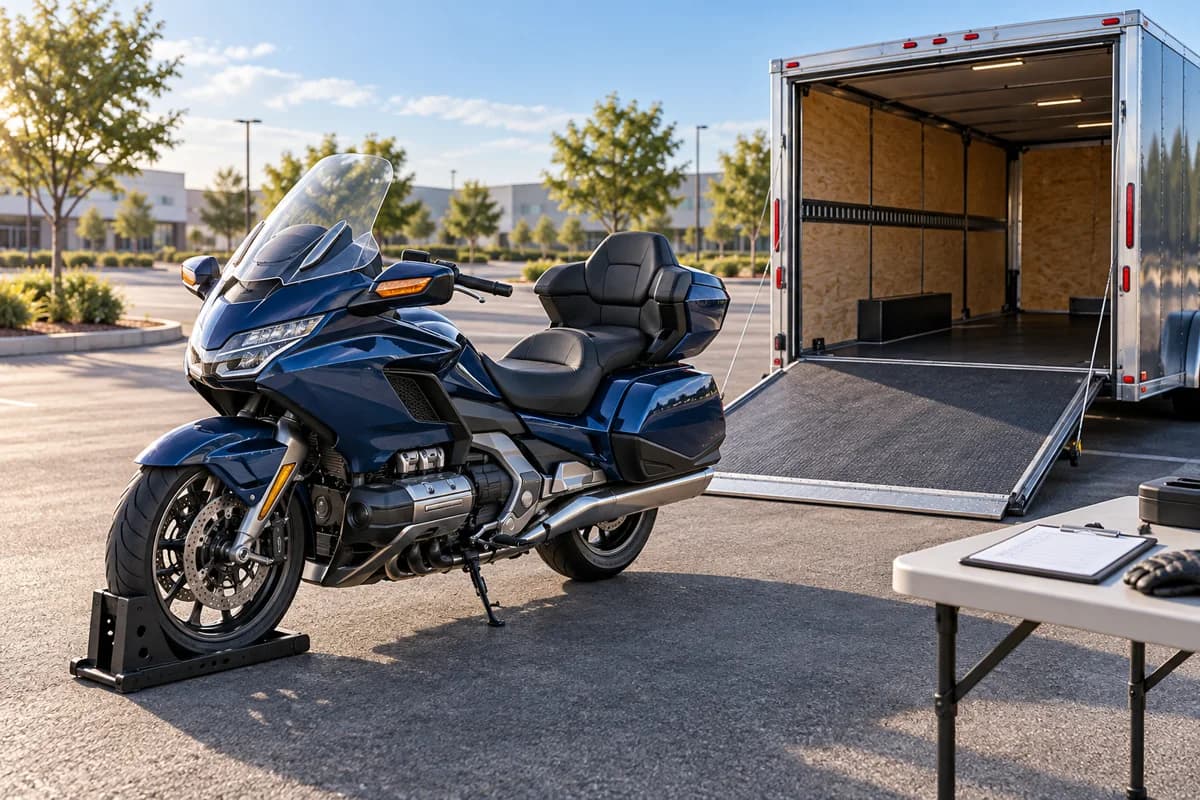
Start with movement, not the engine
The first useful question is not simply, “Does it run?” It is, “What can the motorcycle do while the engine is off?” A bike can have a mechanical problem and still roll smoothly in neutral. Another may have a locked steering column, flat tire, dragging brake or seized drivetrain that prevents controlled movement.
Use this four-level description when asking for transport:
- Starts and moves under its own power: identify any intermittent issue, warning light or leak even if the bike operated during the last test.
- Will not start, but rolls and steers: confirm neutral, brakes, tire inflation, keys and steering lock status.
- Does not roll, steer or brake normally: specify each affected function and which wheel or control is involved.
- Damaged or partly disassembled: list missing wheels, forks, handlebars, controls, bodywork and loose components; provide current photos from both sides.
Do not test an unsafe or unstable motorcycle simply to answer the checklist. Ask the shop, seller or storage facility for an accurate description instead. If the bike is leaning against a wall, on a service lift or missing structural parts, say so before anyone schedules collection.
Give the quote coordinator the bike’s full footprint
Year, make and model are the starting point. Add the VIN when the pickup involves a seller, dealer, auction or storage facility so everyone can identify the same unit. NHTSA provides a public VIN decoder for information encoded by the manufacturer; use the VIN on the motorcycle or documents and verify that it matches the unit being released.
Then describe anything that changes the space or loading angle:
- sidecar, trike conversion or training-wheel kit;
- extended forks, lowered suspension or very low exhaust;
- touring trunk, hard panniers, oversized windscreen or wide handlebars;
- custom fairings, crash bars, highway pegs or nonstandard controls;
- fluid leaks, loose panels or parts that cannot be secured to the motorcycle;
- crate, pallet or stand already attached to the bike.
Provide actual overall length, width, height and weight for a trike, sidecar, heavily customized bike or crate. Model specifications may not reflect aftermarket parts. Photos from the front, rear and both sides help show clearance and width, but measurements still matter.
Your request should also include both ZIP codes, earliest release date, pickup hours, contact names and any hard deadline. Ask for current availability for the actual lane instead of treating an estimate as a guaranteed loading or delivery time. Review the dedicated motorcycle transport service before requesting a personalized quote.
Make the pickup location part of the equipment plan
A motorcycle that rolls can often be moved a short distance to meet the trailer. A motorcycle with a locked wheel or damaged steering may not. Tell the coordinator where the bike is physically stored: street level, garage, basement ramp, repair bay, warehouse dock, auction yard or unpaved property.
The driver needs legal, stable access with enough room to position the trailer and loading equipment. Call out steep driveways, soft gravel, low clearances, gated hours, residential truck restrictions and indoor storage. If the address cannot accept a large vehicle, arrange a nearby meeting point only when the motorcycle can be moved there safely. Our door-to-door pickup guide explains why “door-to-door” means the closest safe and legal access point.
Have an adult at pickup who understands the bike’s condition and is authorized to release it. That person should hold the correct keys, know how the steering lock works, point out existing damage and review the pickup condition report. For a dealership, repair shop or auction, confirm the correct entrance, business hours and release reference before dispatch.
Do not build a makeshift ramp, tow the bike with another vehicle or ask people on site to improvise a loading method. Describe the situation and let the assigned transport provider confirm how it will be handled. If recovery work is needed to free a locked wheel or move a severely damaged bike, arrange that before ordinary transport pickup.
Match the trailer to the motorcycle—not just the route
Motorcycles are normally kept upright with motorcycle-compatible positioning and securement equipment. Federal cargo rules require commercial loads to be contained, immobilized or secured so they do not shift enough to affect vehicle stability. FMCSA’s cargo securement overview also explains that items likely to roll must be restrained by chocks, cradles or equivalent means. The assigned transport provider is responsible for selecting and using compliant equipment; the owner should not prescribe a homemade tie-down plan.
Enclosed transport can limit exposure to weather and road debris, which often matters for finished, collector and custom motorcycles. Open transport may be considered for some working or project bikes when compatible motorcycle equipment is available. The best choice depends on value, finish, dimensions, condition, lane and equipment—not merely whether the engine starts.
A non-running motorcycle that rolls may need a controlled winch or other loading system. A trike or sidecar needs more deck width. A bike that will not roll may require skates, dollies or a specialty recovery step, but the exact solution must be approved for that motorcycle and trailer. Ask what equipment is planned; do not assume every carrier can accept every condition.
If the bike is already in a crate, the shipment becomes a different handling question. Confirm the crate’s total dimensions and weight, whether it can be safely lifted, and whether a forklift, pallet jack or loading dock is available at pickup and delivery. Never promise loading equipment on behalf of a seller or shop—verify it directly.
Document a project bike as carefully as a finished one
Clean only enough to make existing condition visible without disturbing fragile parts. Photograph the tank, fairings, fenders, wheels, forks, exhaust, controls and both sides in good light. Add close photos of existing scratches, corrosion, leaks, cracks or missing components. A short walk-around video can supplement the still images, but it does not replace the pickup report.
Remove personal belongings and get approval before leaving detachable accessories or packaged parts with the motorcycle. Disable an alarm if it can activate during handling, and share any manufacturer or repair-shop instruction needed to unlock or move the bike. Do not drain fluids, disconnect a battery or make a repair based on a generic checklist; follow the written instructions for the assigned equipment and the motorcycle’s manufacturer.
At pickup, compare the motorcycle with the condition report before signing. At delivery, inspect it again before the receiving adult signs. Keep both reports and your photos. Ask for the assigned carrier’s applicable insurance certificate before pickup and read its limits and exclusions against the motorcycle and declared value; transport coverage is governed by that policy, not by a blog post.
For a purchased or long-stored motorcycle, transport readiness is not roadworthiness. Check the VIN through NHTSA’s recall lookup, follow manufacturer guidance and arrange a qualified mechanical inspection before riding. If you are moving to another state, use USAGov’s state motor vehicle directory to find the destination agency for title, registration and licensing requirements.
Three non-running motorcycle scenarios
These are planning examples, not customer stories, prices or guarantees.
A vintage project from Wisconsin to Arizona
The seller says the engine is seized, but the bike rolls in neutral and both tires hold air. The buyer sends measurements because the handlebars are wider than stock, confirms keys and steering movement, and arranges an adult release contact in Wisconsin. The restoration shop in Arizona confirms a wide paved delivery area and an adult receiver.
An auction sportbike from Florida to Tennessee
The listing says “non-runner,” while current photos show front-end damage. Before dispatch, the buyer asks the auction whether the front wheel rolls, whether the forks turn and whether loose fairings have been removed. The transport request identifies the auction release number, exact condition and commercial entrance instead of relying on the listing description. The buyer keeps title work separate from pickup authorization.
A trike from Oregon to Nevada
The trike starts but cannot move under its own power because of a drivetrain fault. Since a trike’s width and weight differ from a two-wheel motorcycle, the owner supplies actual measurements and discloses the steep residential driveway. Pickup is planned at a nearby repair shop only after the shop agrees to receive the trike and provide safe access. The Nevada receiver confirms the delivery space before assignment.
Non-running motorcycle transport FAQs
Can a motorcycle be shipped if the engine will not start?
Often, yes. The decisive details are whether the bike rolls, steers, can be placed in neutral, has working brakes and has keys. Share those facts before equipment is assigned. A motorcycle that will not move freely needs a different plan from one that simply has a dead battery.
What if one wheel is locked?
Disclose the locked wheel and do not describe the bike as merely non-running. Standard rolling and winching assumptions may no longer apply. The coordinator must confirm whether suitable loading and handling equipment is available, and some conditions may require a recovery or specialty solution before ordinary transport.
Does a non-running motorcycle need a crate?
Not automatically. Many domestic motorcycle moves use motorcycle-specific trailer equipment without a crate. If the bike is already crated, provide the crate dimensions, total weight and forklift or dock situation at both ends so the shipment can be evaluated correctly.
Can loose parts travel with a project motorcycle?
Do not assume they can. Photograph and inventory removed parts, package them separately and ask for written approval before pickup. A loose fairing, fuel tank, exhaust or box of hardware can damage the bike or become unsecured cargo.
Who can release the motorcycle if I am not at pickup?
An adult you authorize may handle the pickup if the seller, shop or storage facility accepts that arrangement. Give the contact the keys, release authority, pickup instructions and enough time to review and sign the condition report.
Request the right setup for your motorcycle
Tell Genius Auto Trans the route, year, make, model, dimensions, true operating condition, keys, modifications and pickup access. Include current photos when damage or customization affects loading so compatible equipment can be discussed before assignment.
Get my motorcycle transport quote →