
DEALER & AUCTION TRANSPORT ·
Bought a Car Out of State? How Dealer and Auction Auto Transport Works
By Genius Auto Trans · 8 minute read
The short answer: Finish the purchase, obtain the seller’s pickup instructions and confirm that the vehicle is released before dispatch. Your transport request should include the exact lot, VIN or stock number, buyer or release reference, operating hours, contact details and the vehicle’s true condition. A carrier cannot solve a payment hold, missing authorization or inaccurate “runs and drives” description at the gate.
Buying a vehicle online expands your choices beyond the local market. It also separates the purchase from the physical handoff. The salesperson or auction may never meet you, the driver needs permission to collect the correct unit, and you may see the vehicle in person for the first time at delivery. A clear release plan connects those steps.
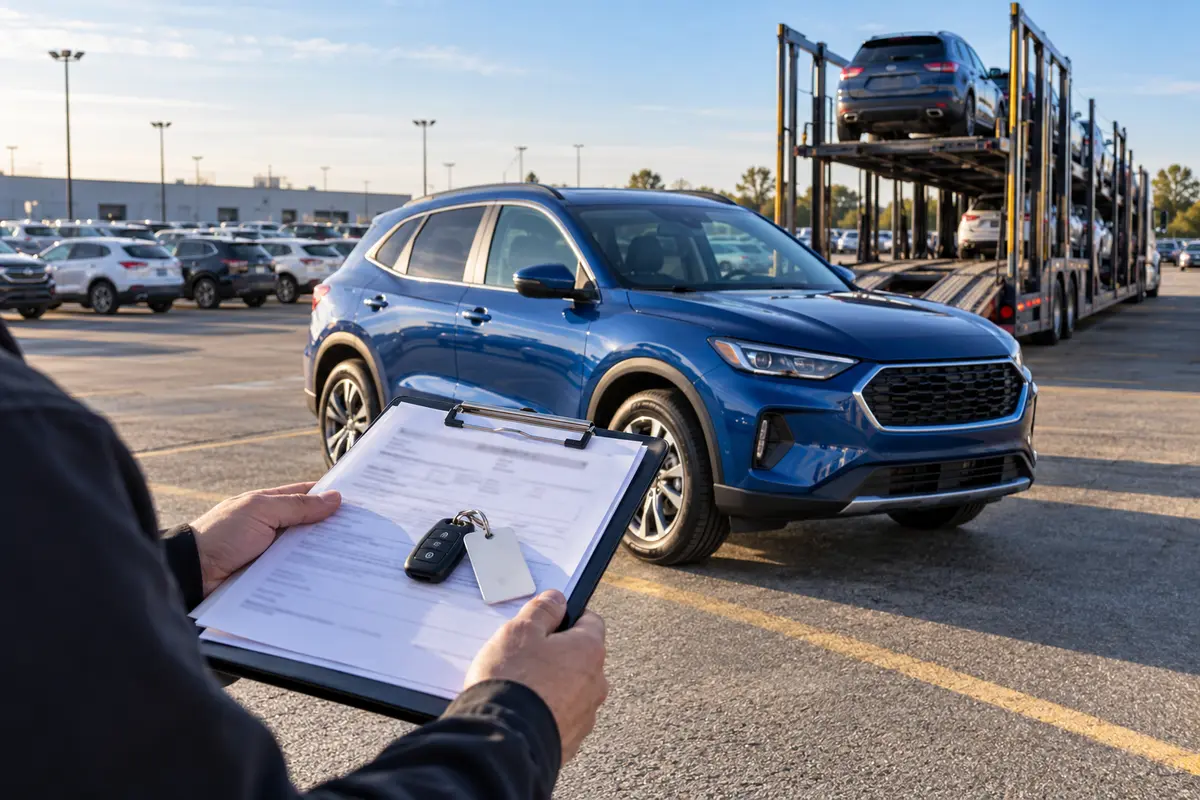
Paid, sold and pickup-ready are three different statuses
A winning bid or signed purchase agreement confirms the deal. It does not necessarily mean a transporter may enter the property and leave with the vehicle. The seller may still need cleared payment, identity verification, a buyer number, an electronic release, a scheduled appointment or an authorized transporter’s information.
Ask the selling location one direct question: “What must be completed before my carrier can pick up this exact vehicle?” Then confirm the answer in writing. Record the lot’s current hours, pickup entrance, appointment procedure and any deadline that affects storage or access. Policies differ by company and location, so instructions from one auction should never be copied to another.
Give the coordinator one complete release packet
The useful packet is not a folder of every purchase document. It is the small set of identifiers and instructions needed to collect the correct vehicle without exposing unnecessary personal information.
- Vehicle identity: year, make, model, color and full VIN; include the stock or lot number when the seller uses one.
- Release reference: buyer number, gate pass, pickup code or other authorization specified by the seller.
- Exact location: facility name, street address and the correct transport or commercial entrance.
- Lot contact: the department or person who can resolve a release question during pickup hours.
- Access rules: appointment requirements, driver check-in instructions and operating hours supplied by the facility.
- Destination contact: an adult who can receive the vehicle, inspect it and sign the delivery paperwork.
Share only what the pickup requires. Keep account passwords, full payment-card data and unrelated identity documents out of transport messages. If the seller asks for the driver or carrier details, have Genius Auto Trans coordinate the information after assignment.
The vehicle title, registration and sales documents follow the seller’s and your state’s process. Transport release is not proof that title work is complete. Ask the dealer, auction and relevant motor vehicle agency what must be handled separately.
Describe what the driver will actually find
“Looks good in the photos” is not a loading description. For transport, the important questions are whether the vehicle starts, rolls, steers and brakes; whether keys are present; whether the tires hold air; whether the parking brake releases; and whether collision damage, missing parts or low clearance affects loading.
Tell the coordinator about loose bumpers, hanging exhaust, deployed airbags, locked wheels, missing glass, fluid leaks or parts stored inside the vehicle. Do not ask the driver to discover these conditions at pickup. A vehicle that cannot move under its own power may need a winch and compatible loading equipment. A unit that does not roll, steer or brake can require a different solution altogether.
Ask the seller for current photos from all four corners, the interior, odometer, VIN label and any known damaged area. Save the online listing, condition report and purchase documents. The carrier’s pickup inspection records visible condition for transport; it does not determine mechanical quality or confirm the seller’s description.
For a used dealer purchase, the Federal Trade Commission explains the Buyers Guide, written promises and independent inspections. The FTC notes that a vehicle-history report is not a substitute for an independent mechanical inspection. Arrange purchase due diligence before transport whenever possible.
Request transport with the lot and vehicle details already attached
A useful quote request includes both ZIP codes, the exact pickup facility, vehicle year/make/model, operational condition, first available release date and any deadline set by the seller. Vehicle size, condition, equipment choice, lane and scheduling flexibility can all affect availability and price.
Open auto transport is the standard choice for many everyday dealer and auction purchases. Enclosed auto transport may fit a classic, collector, exotic or luxury vehicle when additional protection and specialized handling matter. If damage or low clearance changes how the vehicle can be loaded, disclose that regardless of trailer type.
Review the dealer and auction auto transport service and ask for the current pickup and delivery planning windows for your actual lane. Do not treat a storage deadline, flight or sales promise as a guaranteed carrier arrival time.
At the destination, confirm that a large carrier can approach safely. If the address has a gate, tight street, low branches or truck restrictions, prepare a nearby legal meeting point using the same principles in our door-to-door pickup and delivery guide.
Three purchase scenarios—and the detail that keeps each moving
These are planning examples, not customer stories, prices or transit guarantees.
A Texas auction purchase going to Colorado
The buyer has paid, but the lot still needs the transporter listed on the release. The buyer sends the VIN, lot number, commercial pickup entrance and release instructions before dispatch. The coordinator also learns that the battery is dead but the vehicle rolls, steers and brakes. That condition is included when arranging pickup from the Texas location.
A Florida dealership sale going to Ohio
The dealer confirms that the car is ready and provides a direct contact for the transport desk. The buyer keeps the Buyers Guide and sales documents, verifies insurance and destination requirements independently, and assigns an adult to inspect delivery in Ohio. The transport release does not replace the title process.
A California collector vehicle going to Arizona
The listing shows a low front splitter and nonstandard ground clearance. Instead of requesting transport as an ordinary running coupe, the buyer provides measurements and current photos, then discusses enclosed equipment and loading needs. The destination plan uses a truck-accessible meeting point near the buyer’s Arizona address.
Treat delivery as the first in-person checkpoint
Have the pickup condition report and seller photos available when the vehicle arrives. Before signing, compare the visible condition, photograph the vehicle in good light and note any new damage on the delivery paperwork. Follow the shipment documents for reporting concerns to the assigned carrier and Genius Auto Trans.
Transport inspection is limited to visible condition and is separate from purchase inspection. If you bought remotely, arrange a qualified mechanical inspection before regular use. Use the VIN to check safety information through NHTSA’s recall lookup; NHTSA also lists what its VIN results may not show, so follow manufacturer guidance and do not treat a zero-result search as a mechanical clearance.
Keep the bill of lading, delivery photos, purchase agreement, title documents and any written warranty or “as is” disclosure in their proper records. Each serves a different purpose. A clean delivery does not change the purchase terms, and a purchase dispute is not resolved through the transport condition report.
Dealer and auction auto transport FAQs
Can a carrier collect a vehicle before I receive the title?
Pickup authorization and title transfer are separate matters. A dealer or auction may release a paid vehicle to an authorized transporter even when title paperwork follows another process, but only the selling location can confirm its policy. Do not dispatch a carrier until the lot says the vehicle is released and explains what the driver must present.
What if the auction vehicle does not run?
Disclose that before accepting the transport plan. Explain whether the vehicle rolls, steers and brakes, whether all tires hold air, whether keys are available and whether parts are loose or the ground clearance is reduced. Loading may require a winch or different equipment, and the quote must reflect the actual condition.
Can the driver pay my auction balance or storage fees?
Do not assume so. Settle the purchase and any required lot charges through the seller’s approved process. Confirm that the account is clear for release before the carrier travels to the lot.
Who inspects the vehicle if I bought it online?
The pickup condition report documents what can be seen when the carrier receives the vehicle. Ask the seller for pre-pickup photos and keep the listing and inspection records. Dirt, darkness, inaccessible areas or existing damage can limit what is visible at pickup, so a transport inspection is not a mechanical inspection.
Should I choose open or enclosed transport for an auction purchase?
Open transport is the standard choice for many everyday vehicles. Enclosed transport may be appropriate for a classic, collector, exotic, luxury or especially low-clearance vehicle. Choose according to the vehicle and loading needs, then confirm equipment availability for the route.
Arrange pickup for your out-of-state purchase
Tell Genius Auto Trans the exact pickup facility, delivery ZIP code, vehicle, VIN or stock reference, release date and operational condition. We will discuss equipment and current availability for the specific shipment.
Get my dealer or auction transport quote →Service information checked September 24, 2026 against the Genius Auto Trans dealer and auction service, services and FAQ. Consumer and recall guidance was checked against the FTC and NHTSA sources linked above. Seller release policies, availability, price and timing must be confirmed for each vehicle and facility.